- Role
- Product Designer, self-initiated
- Type
- Concept
- Platform
- Web app for agencies (shown in French), and the proposal page clients receive
- Timeline
- Four weeks, September to October 2026
Alizé is a concept. The research comes from public sources and the screens are mine. The hotels and the geography are real; rates and operators are illustrative.
Why a concept?
Before product design, I managed travel software and teams in Mauritius: specs for a hotel contracting tool, then a service blueprint for a French tour operator. Covid ended that in 2020.
So I went back to the problem I know best and asked what I’d build today. This is a concept case study, so I can show you every step, from the first question to the screens.
How I worked on it
Research
Problem
Product
Objects
Identity
Screens
MePicked the questions, argued with the findings
Framed it from my years in travel
Decided what it is, and what it isn’t
Mapped the objects and who acts on them
Alizé, the astrolabe, one dot
Designed the key moments in Figma
Searched and cited almost 1,000 sources
People only
Questioned the assumptions
Checked the map against the research
Drafted a first brand book
Explored drafts, kept the UI consistent
- ResearchEmpathise
- Picked the questions, argued with the findingsAISearched and cited almost 1,000 sources
- ProblemDefine
- Framed it from my years in travelPeople only
- ProductDefine
- Decided what it is, and what it isn’tAIQuestioned the assumptions
- ObjectsIdeate
- Mapped the objects and who acts on themAIChecked the map against the research
- IdentityIdeate
- Alizé, the astrolabe, one dotAIDrafted a first brand book
- ScreensPrototype
- Designed the key moments in FigmaAIExplored drafts, kept the UI consistent
50 hover four weeks30 h with AI20 h alone in Figma
Three questions before drawing anything
Desk research with Claude Code, from public sources. Three questions mattered most.
Why do agencies still exist?
Anyone can book Mauritius online in ten minutes, yet France never lost its agencies. People pay for the bad day: a cancelled flight, a cyclone, someone to call.
What is AI changing?
Two French clients in ten now walk in with a ChatGPT itinerary. No assistant handles a change or a refund, so AI can draft the trip, but a person still has to commit to it.
Do you need a tourism degree?
No law in France asks for a tourism degree. Studies of sales put product knowledge first and reading the client second.
What the research opened up
Nobody sells help for the bad day
Fast AI quotes are already on sale, in French from €16 a month. The part that costs money when a trip goes wrong still has no tool.
Senior knowledge, at the moment of quoting
The knowledge matters more than the diploma, and most of it can be learned. Today it lives in seniors’ heads and takes years to pass on.
The AI drafts, the expert signs
So the tool prepares everything, and a person signs.
The expert making the quote has to remember every check the agency expects, for every supplier and every traveller. The agency signing it is liable for every part of the trip, and has to prove what it sent.
So the question became
How might we let any expert quote like a senior, and let the agency prove what it sent?
What Alizé is, and what it isn’t
Alizé is a quoting tool for travel agencies. It reads the client’s request, prepares the quote with the agency’s rules and what its seniors know, and a person signs.
It isn’t a chatbot, a booking engine, or a replacement for the expert.
Before any screen, I listed the things the tool deals with and who can act on each, using object-oriented UX.
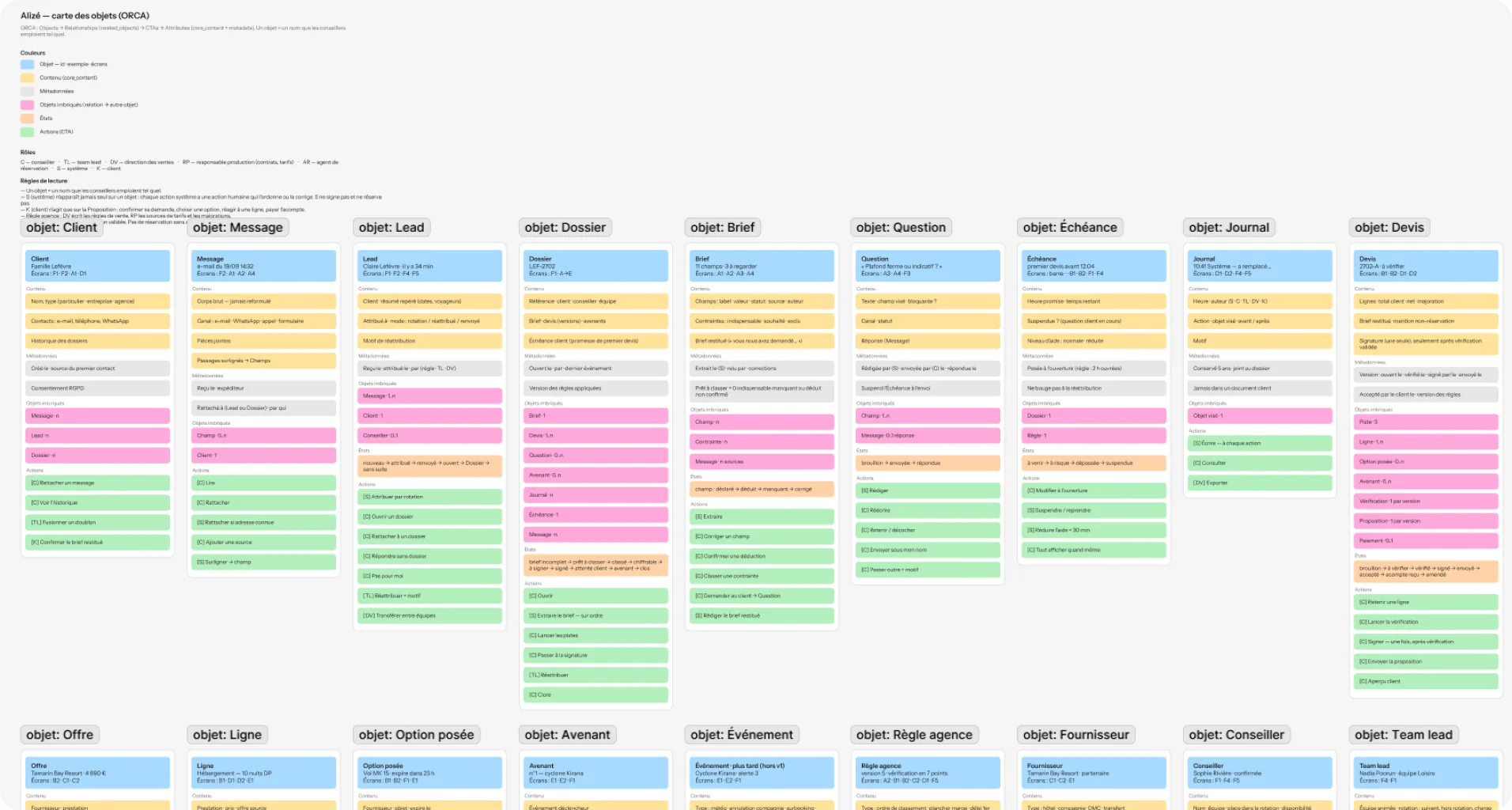
Twenty-five objects came out of it. Two carry the rest: the dossier, which follows a trip from the first email to the flight home, and the proposal, the quote someone signs.
On a real project I’d review this map with agents and managers. Here I checked it against the five roles of my old tour operator blueprint.
AI fills every surface
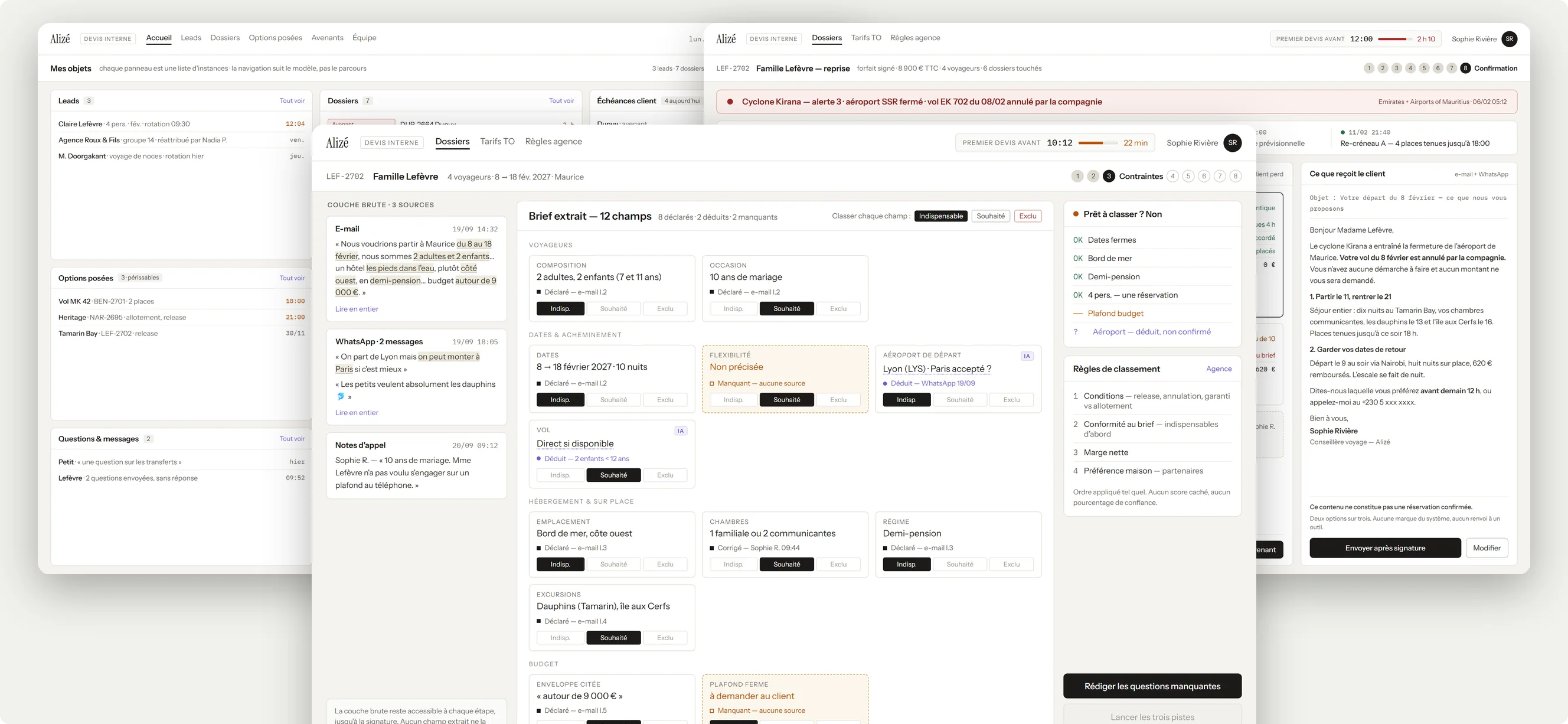
When I let AI explore the screens in Claude Design, it filled every surface: every field a card, every card three buttons, every panel a list. None of it was wrong, and all of it was too much to read before the first coffee. I kept the ideas and threw away the density.
Bad at navigation
Every screen came with its own menu: six tabs on one, three on the next, none on a third. When it had to pick, it gave each object its own tab, the way the data is stored, not the way an expert’s day goes. I redrew the navigation from the day.
Wireframes, no identity
Almost no colour, one font, no brand. The brief, where each answer came from, and the actions. If it didn’t work like this, colour wasn’t going to save it.
Defining an identity
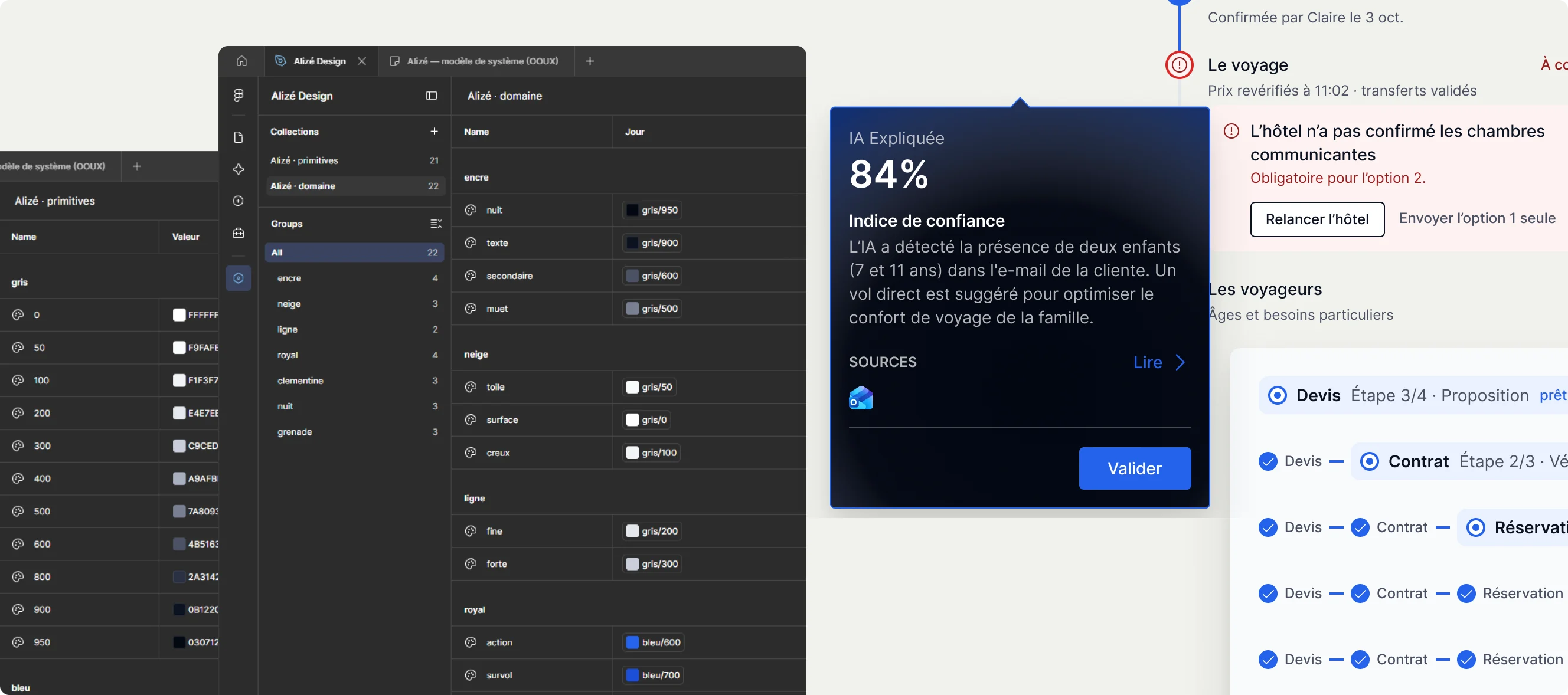
The structure held, so the identity went on top of it without moving the layout.
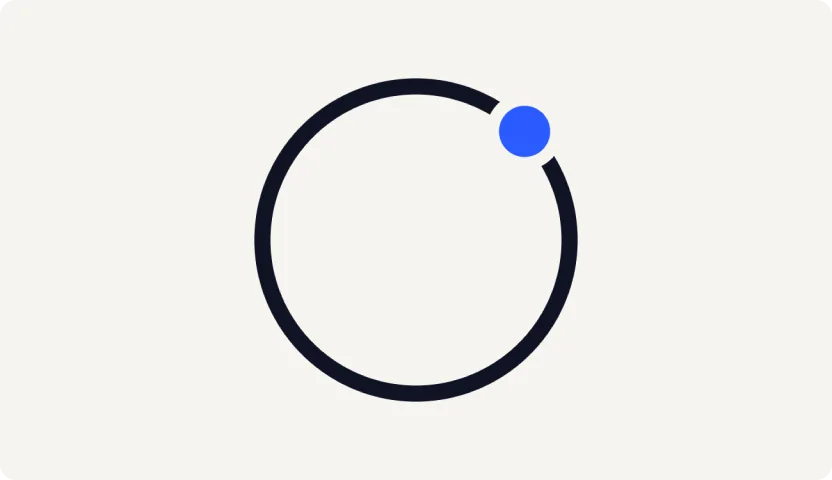
In a tool people use all day, AI can’t be a sparkle on every button. Alizé’s mark is an astrolabe, and its dot is how the system shows where each answer came from.
One dot, three states


It works for the expert. Alizé reads the request, says how sure it is and runs the search, and an assistant is there for anything else.
The system reads, searches and checks. The expert decides what goes out under their name.
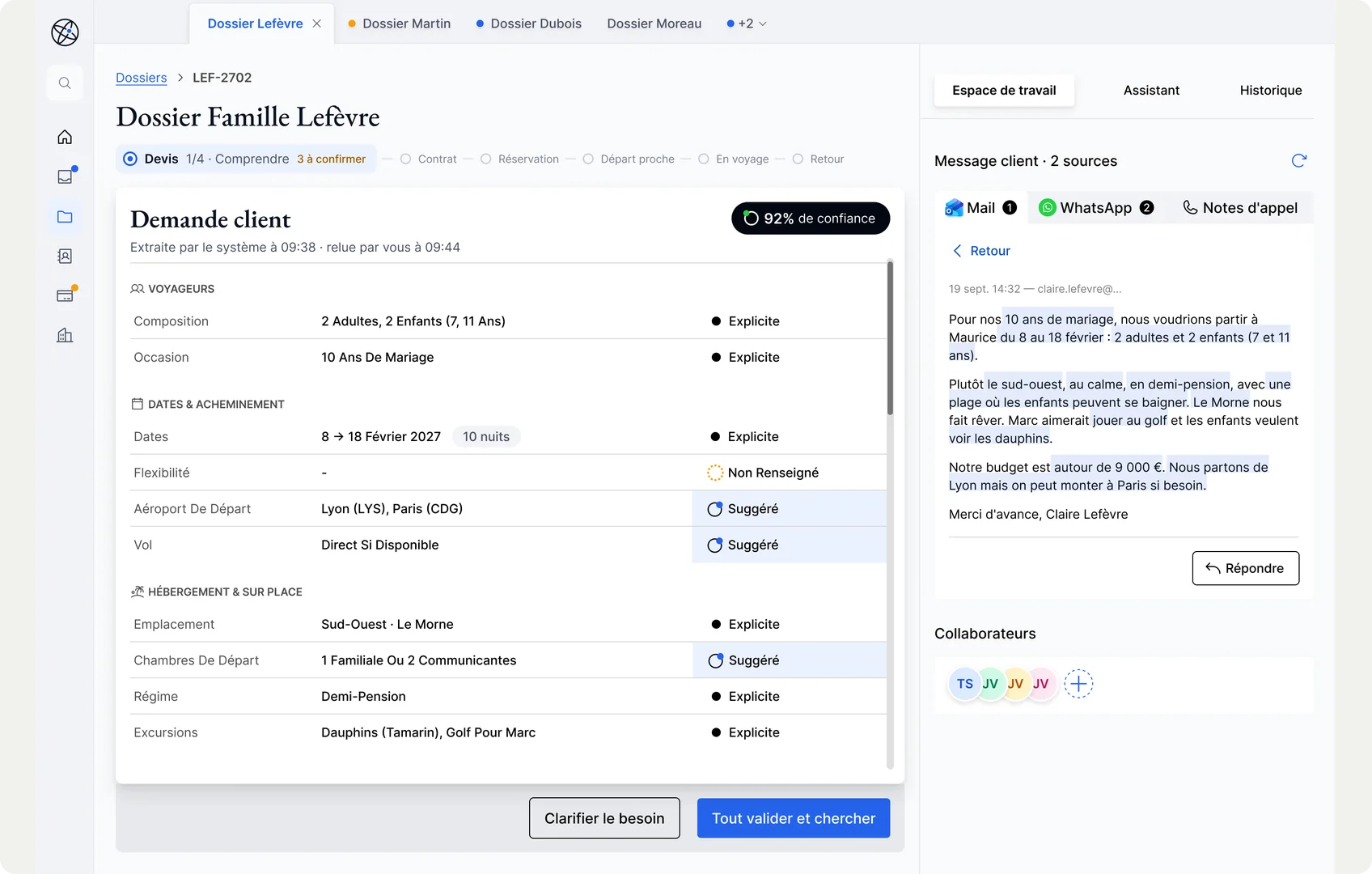
The request, as we understood it
Every field says if it was stated, guessed or missing. The client confirms it before anything is priced.
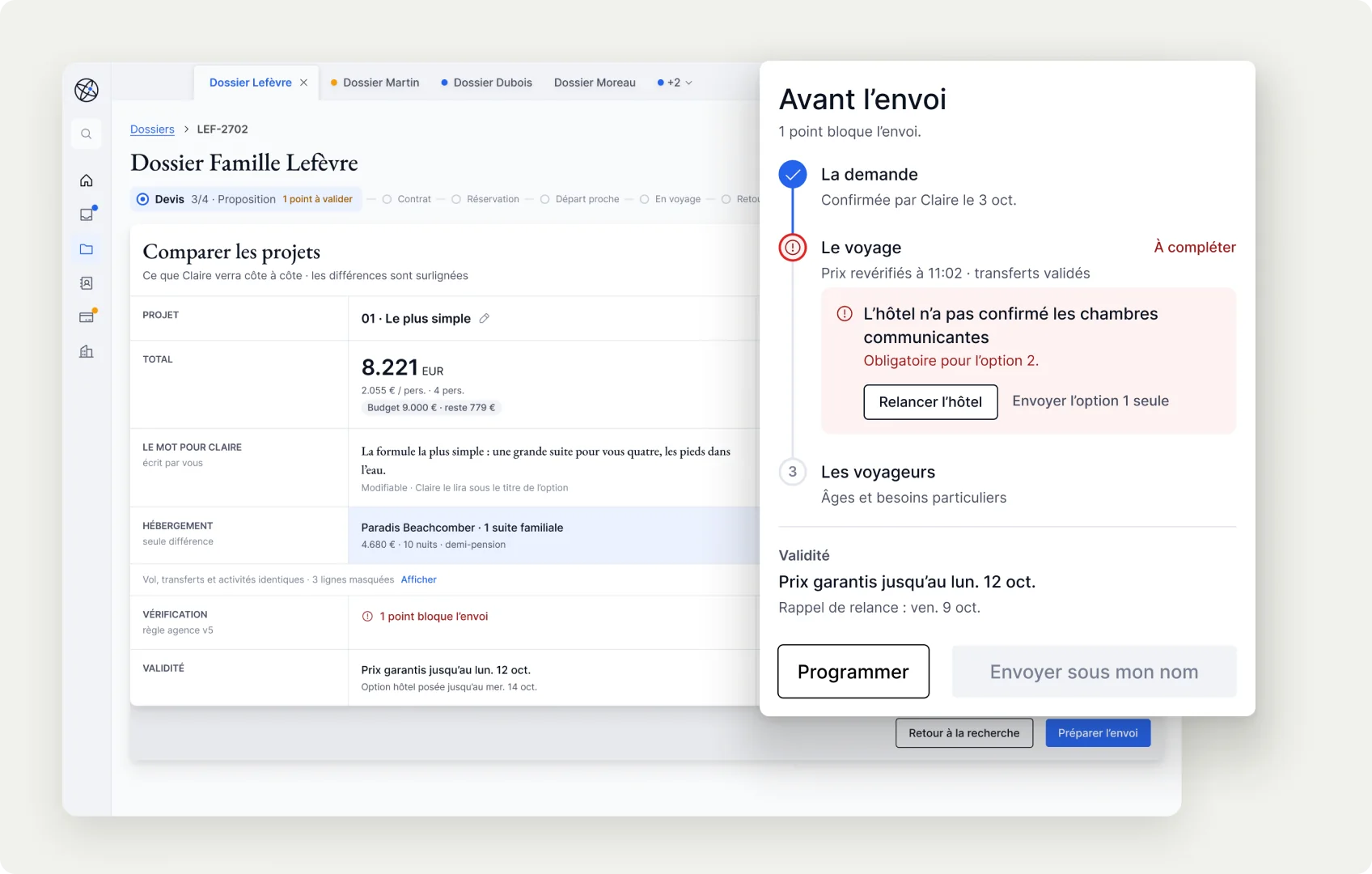
When something blocks the quote
The hotel hasn’t confirmed the connecting rooms. Option 2 can’t go out until it does.
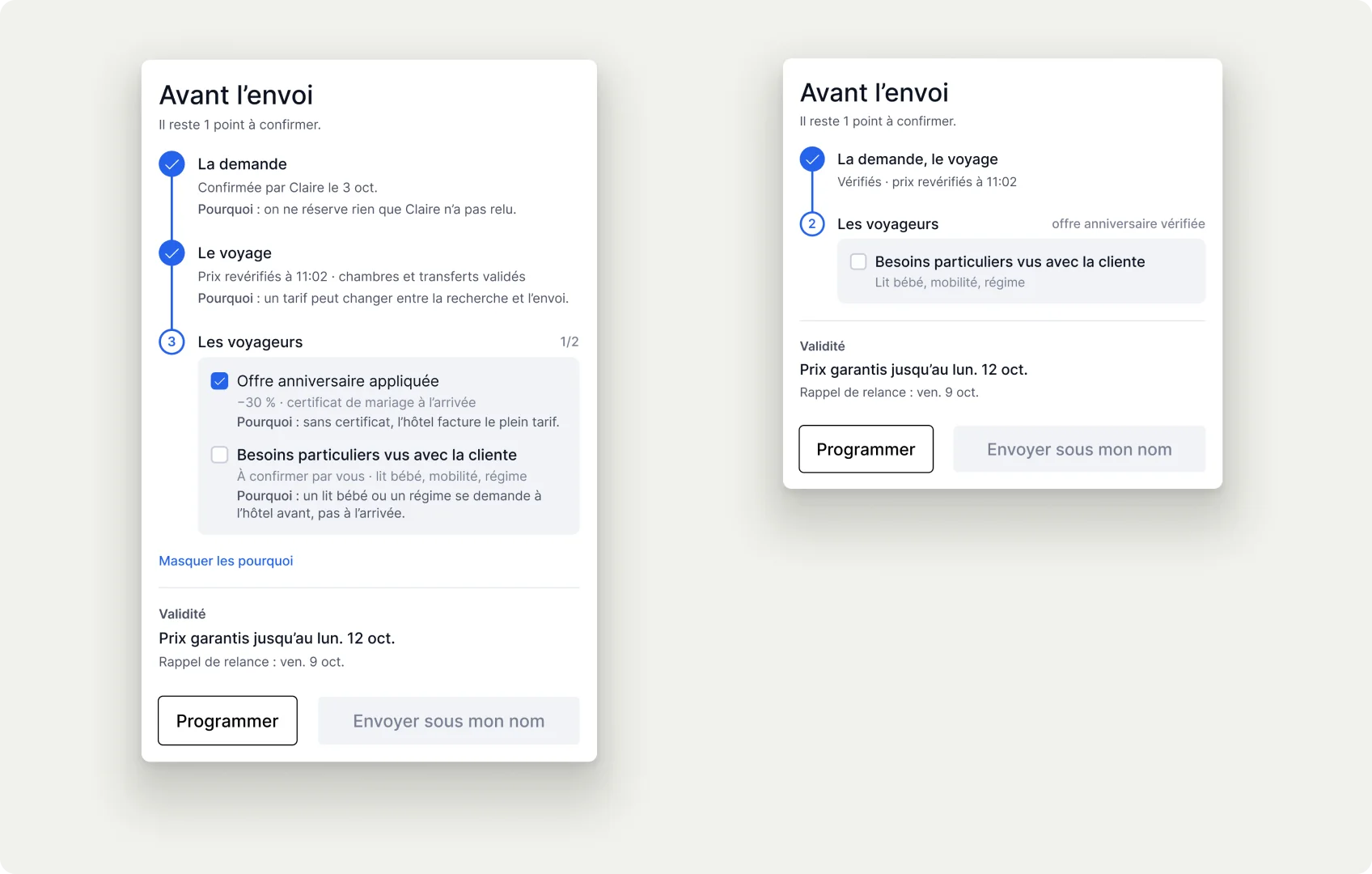
Help that fades
A junior sees why each check exists. A senior sees one line.
Typed or said
On the phone with a client, the expert can just say what changed. Alizé turns it into edits on the brief, with the call as the source, and nothing changes until she applies them.
What does the customer see?
One proposal she can say yes, no or not quite to.


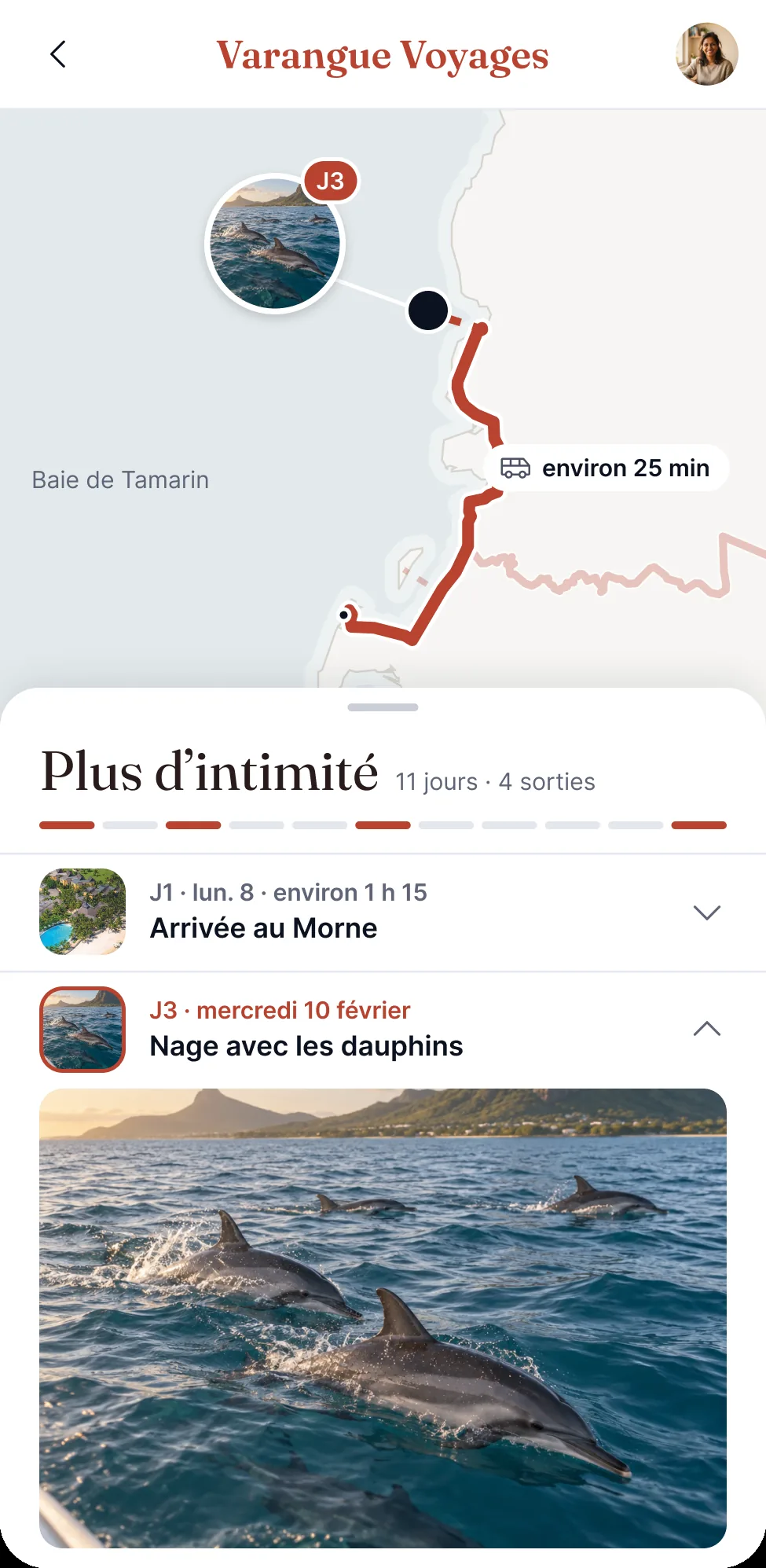
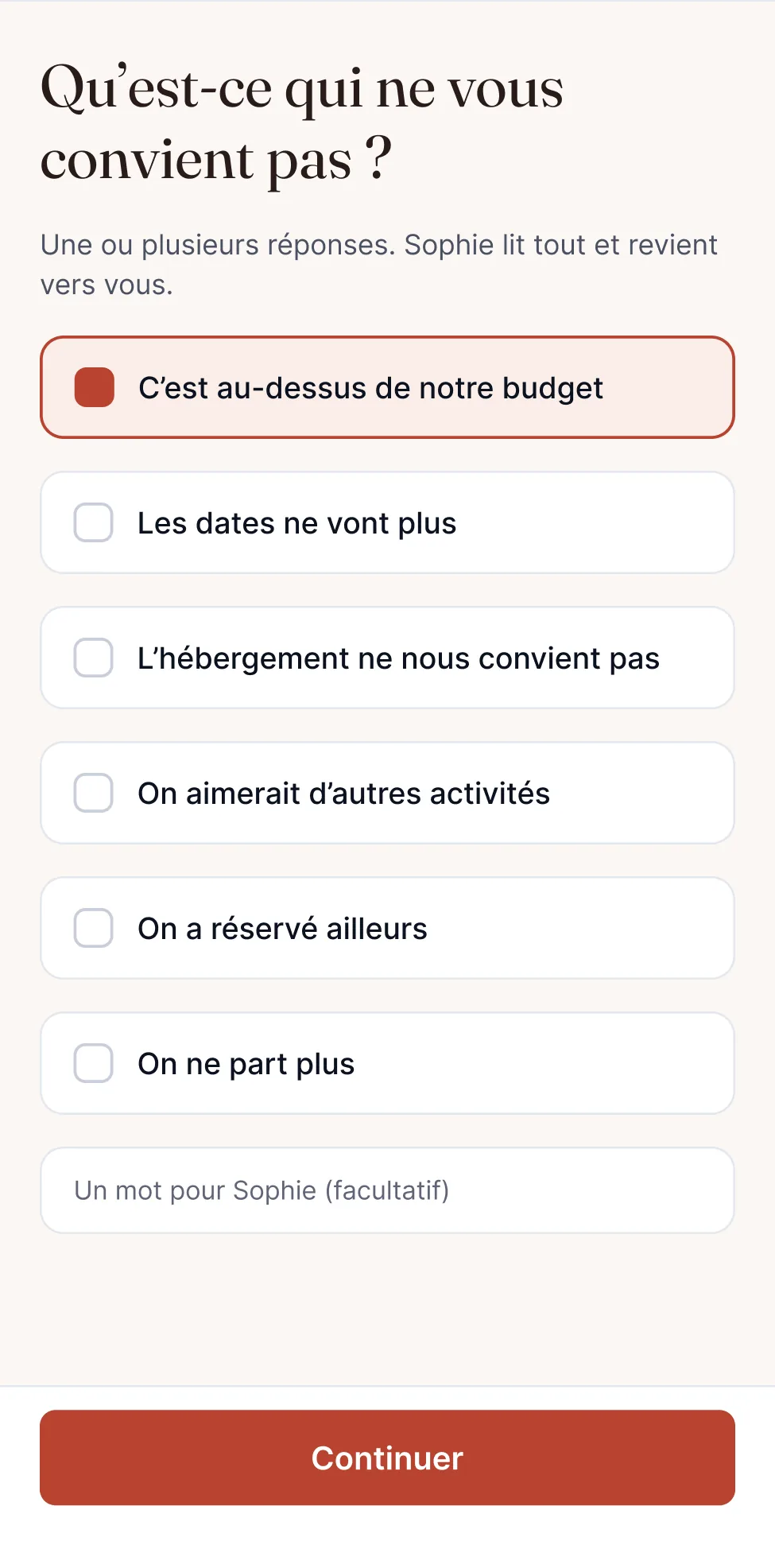
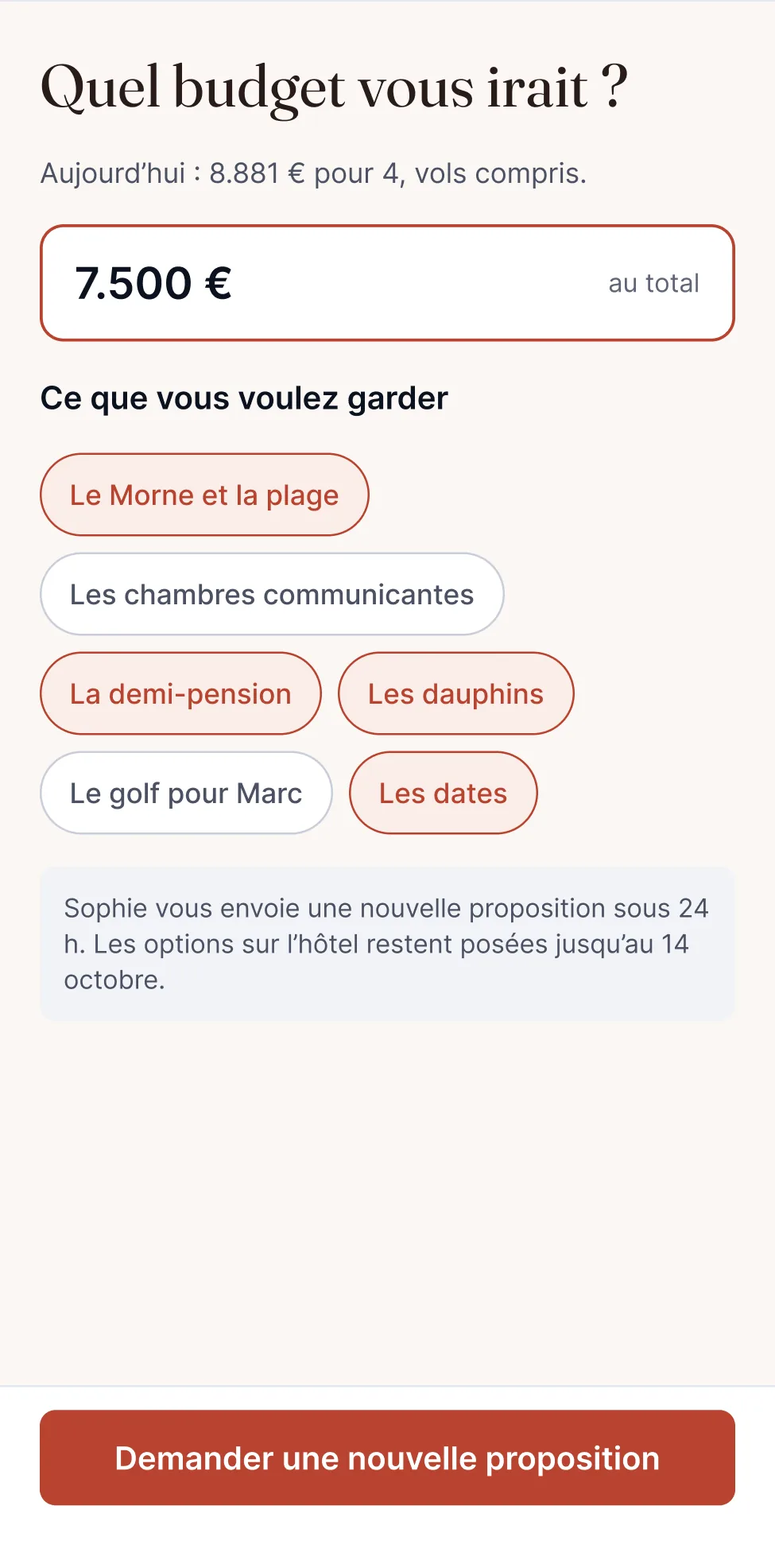
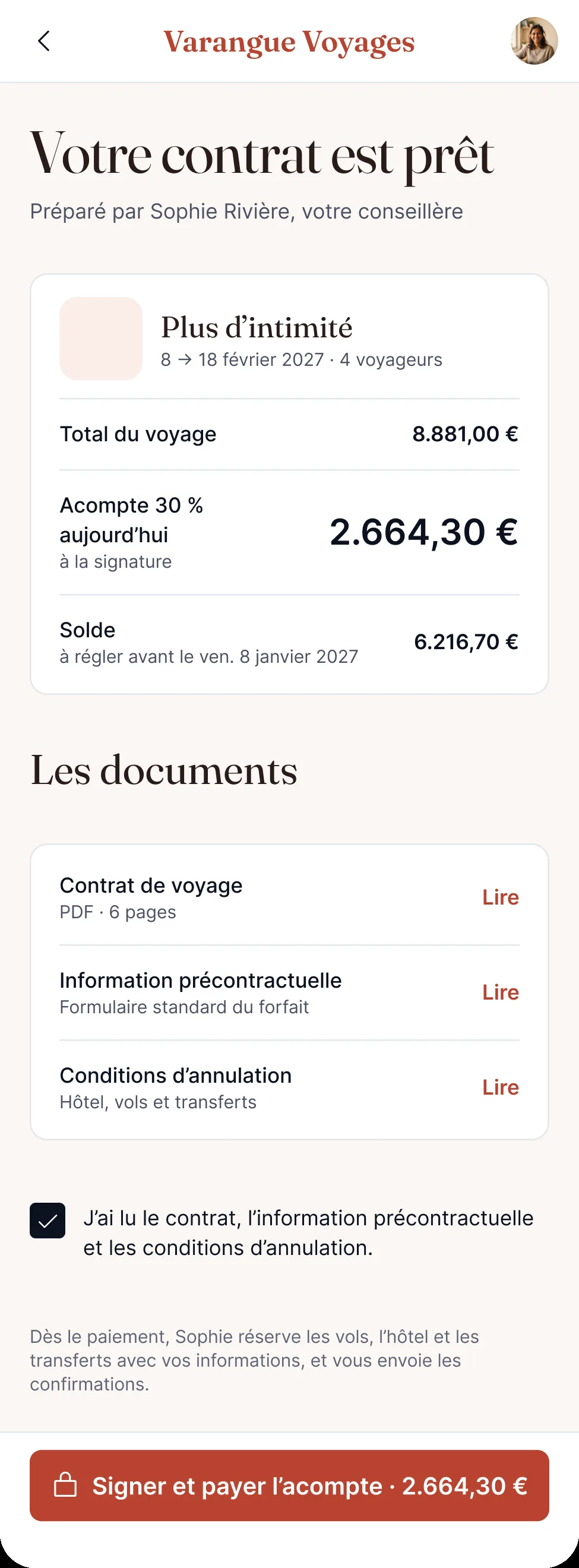
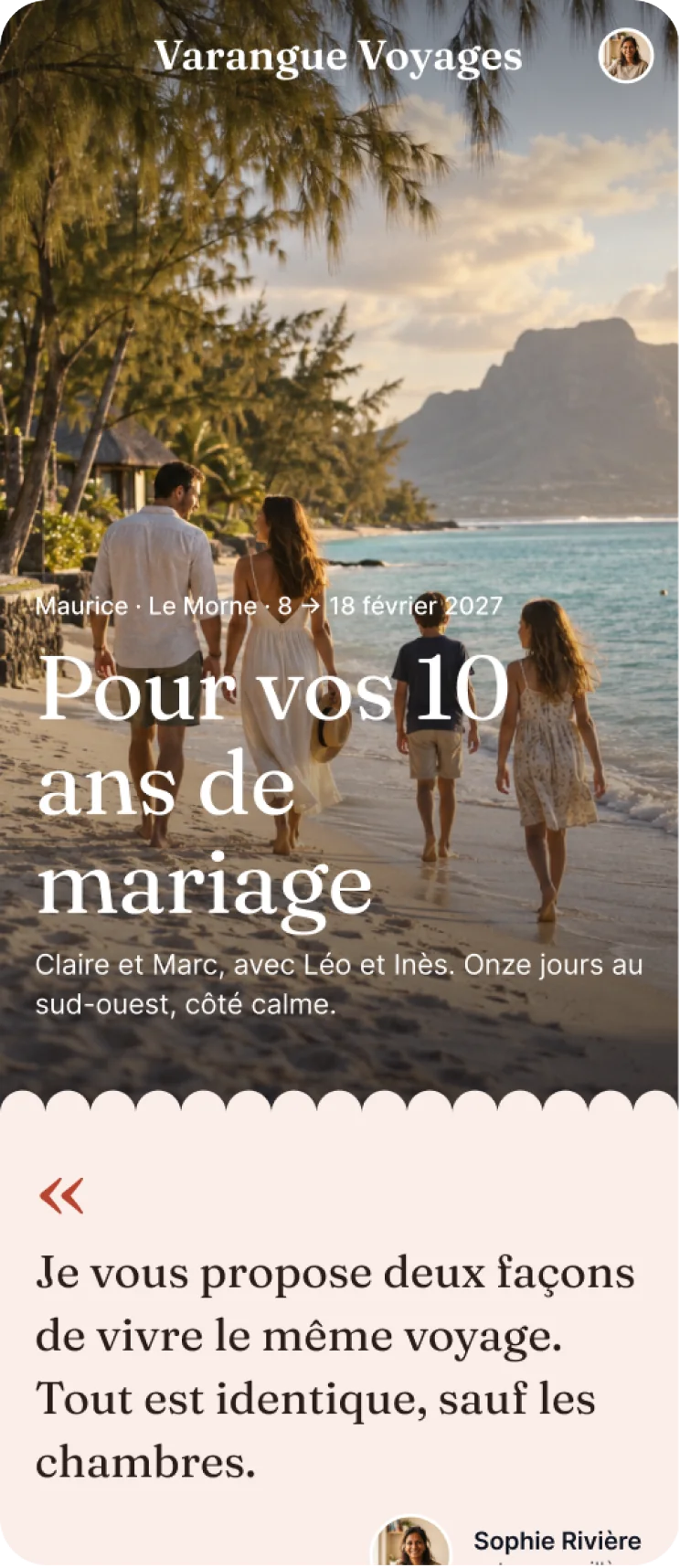
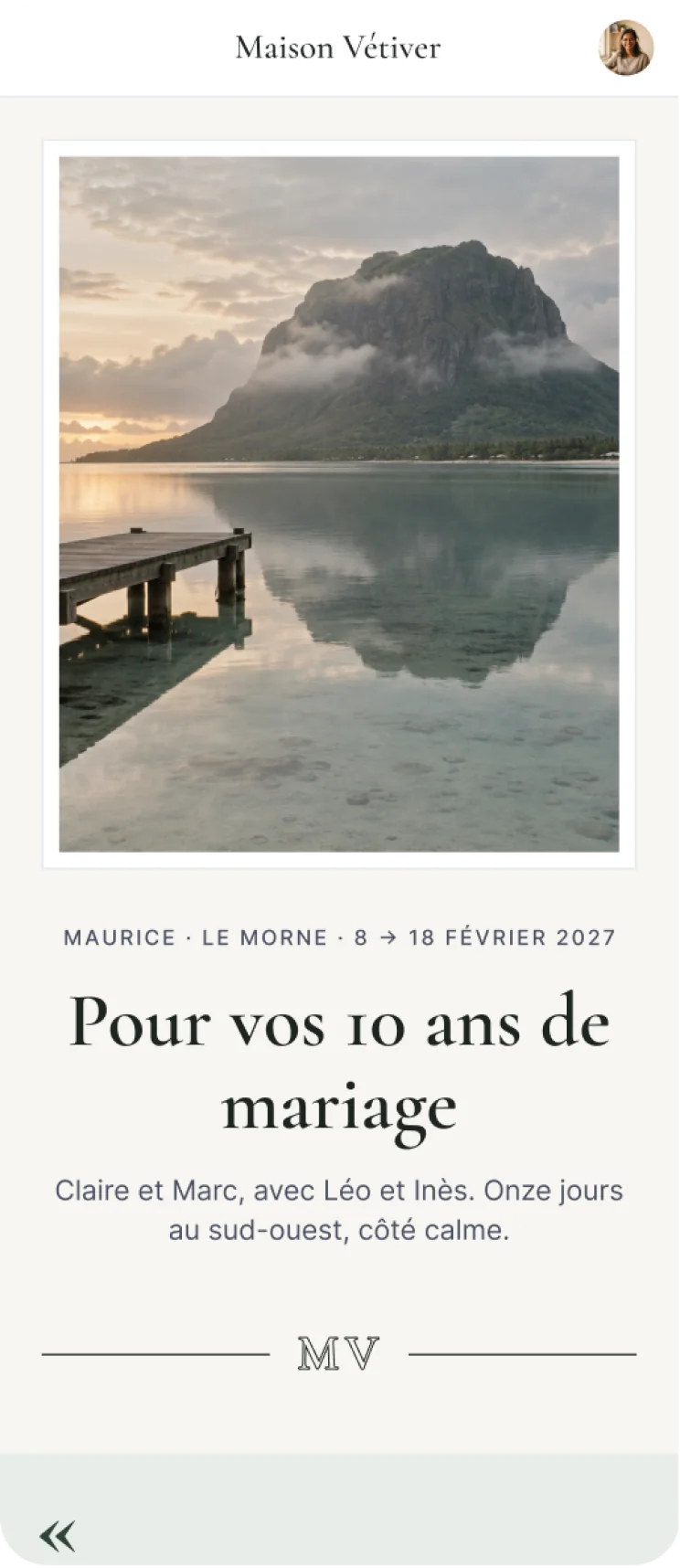
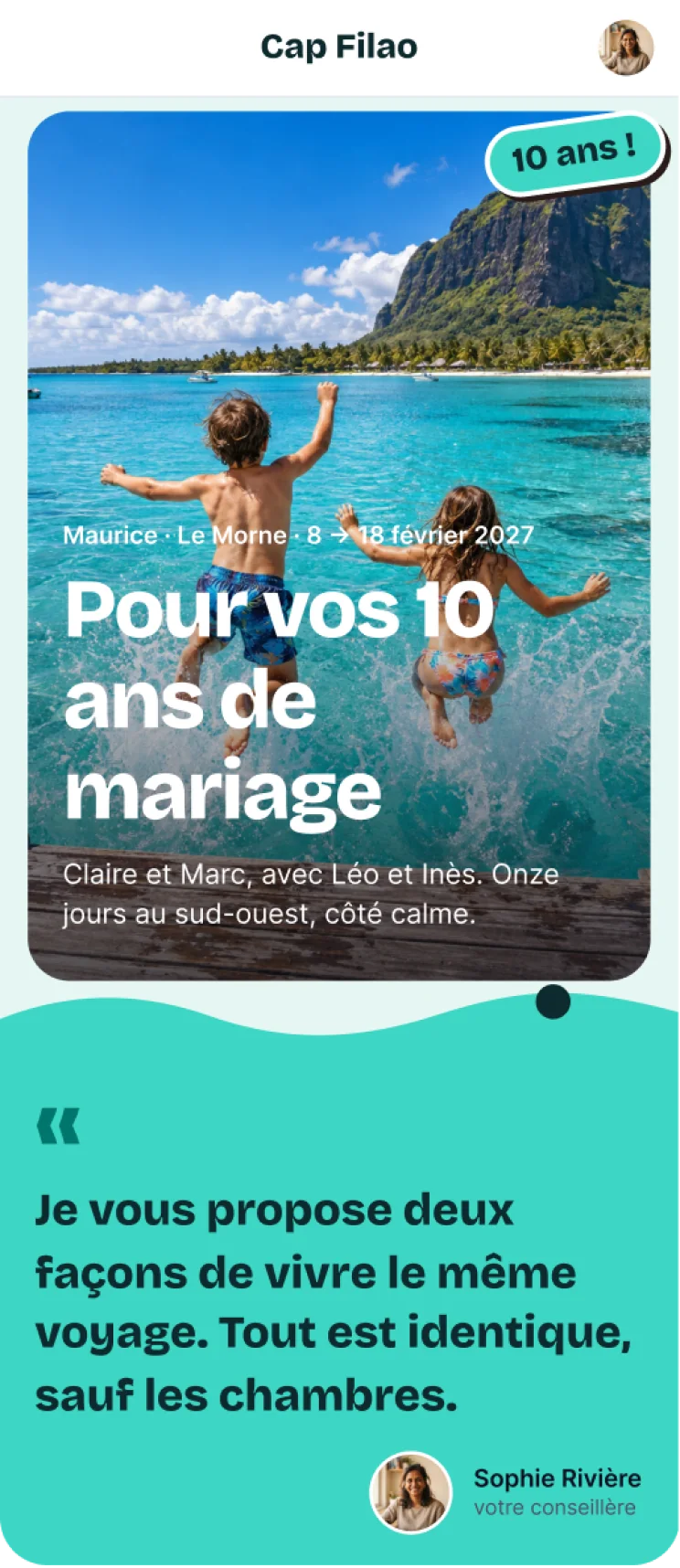
It’s white-label. The customer never sees Alizé, only her agency, with its own name, logo and colour.
The agency picks
One theme out of threeChaleureux, Épuré or Vif. That’s the only style choice the agency makes.
Its logo
One colourAlizé derives the shades and checks the contrast.
A title fontFrom the theme’s short list.
Alizé keeps fixed
Layout, components, body text and statesA refused payment reads the same in every agency.
The legal footerPrice validity, the adviser’s name and "assisted by Alizé" are always shown.
The day the airport closes
A cyclone cancels a family’s flight home. This is the agency’s next hour.
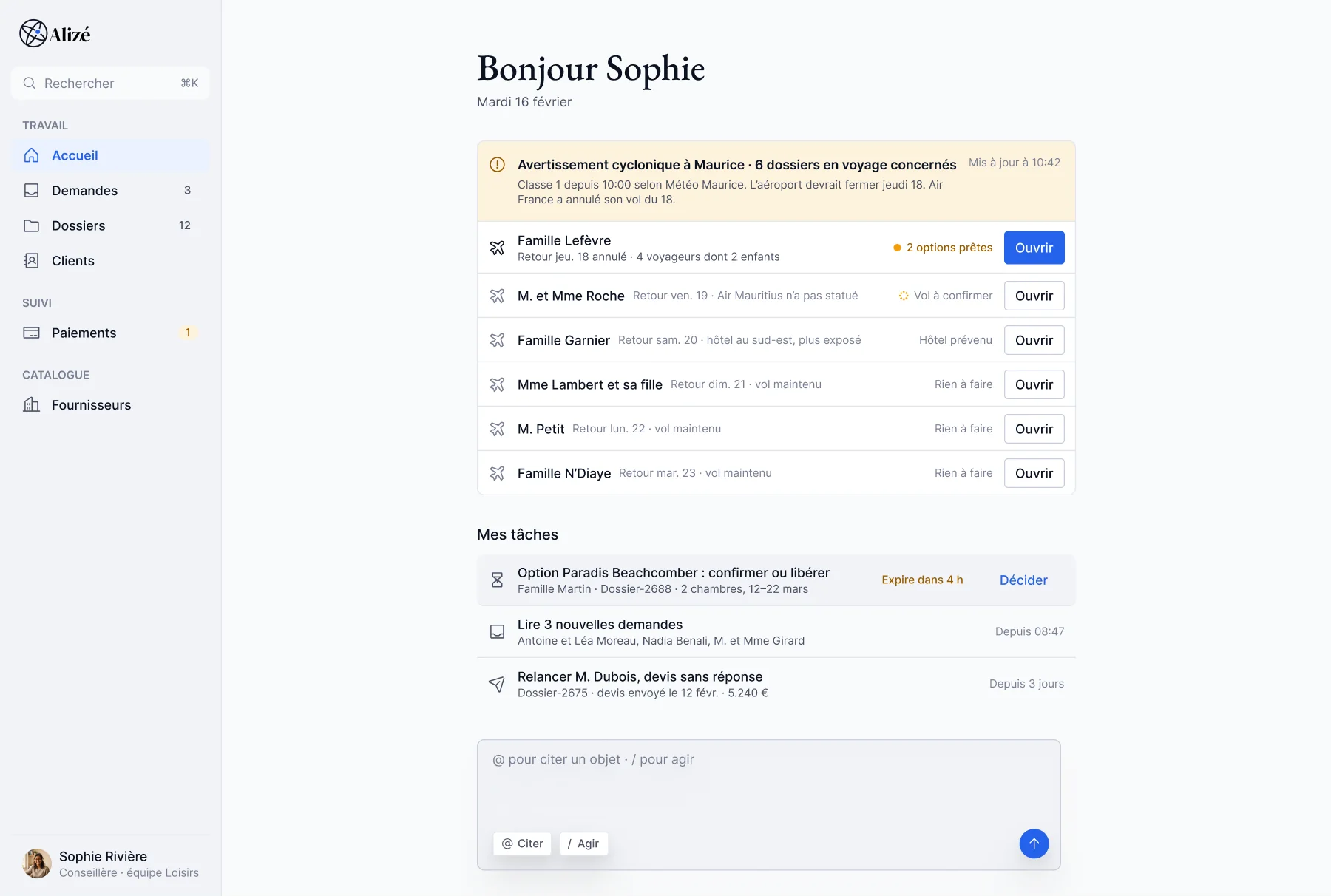
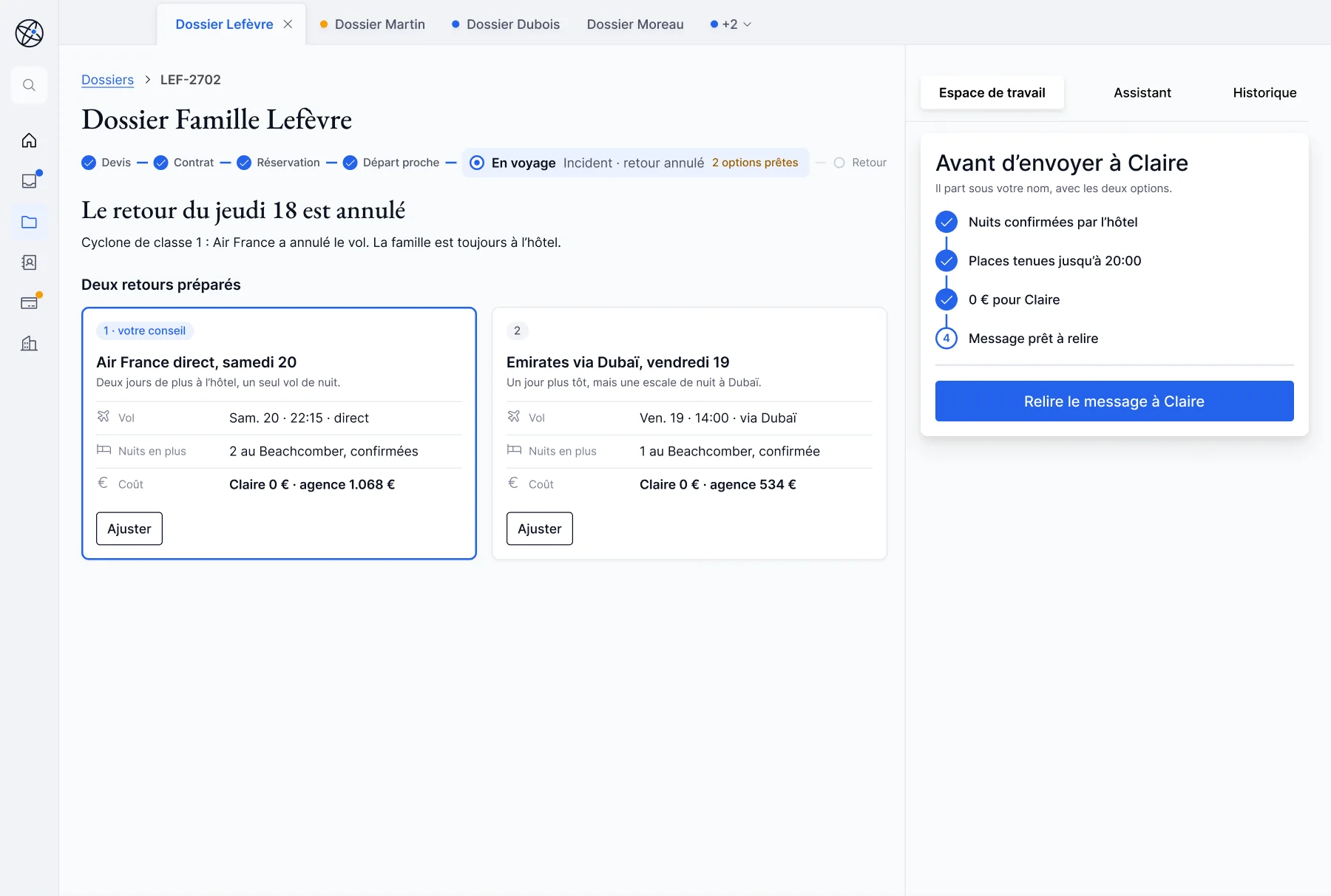
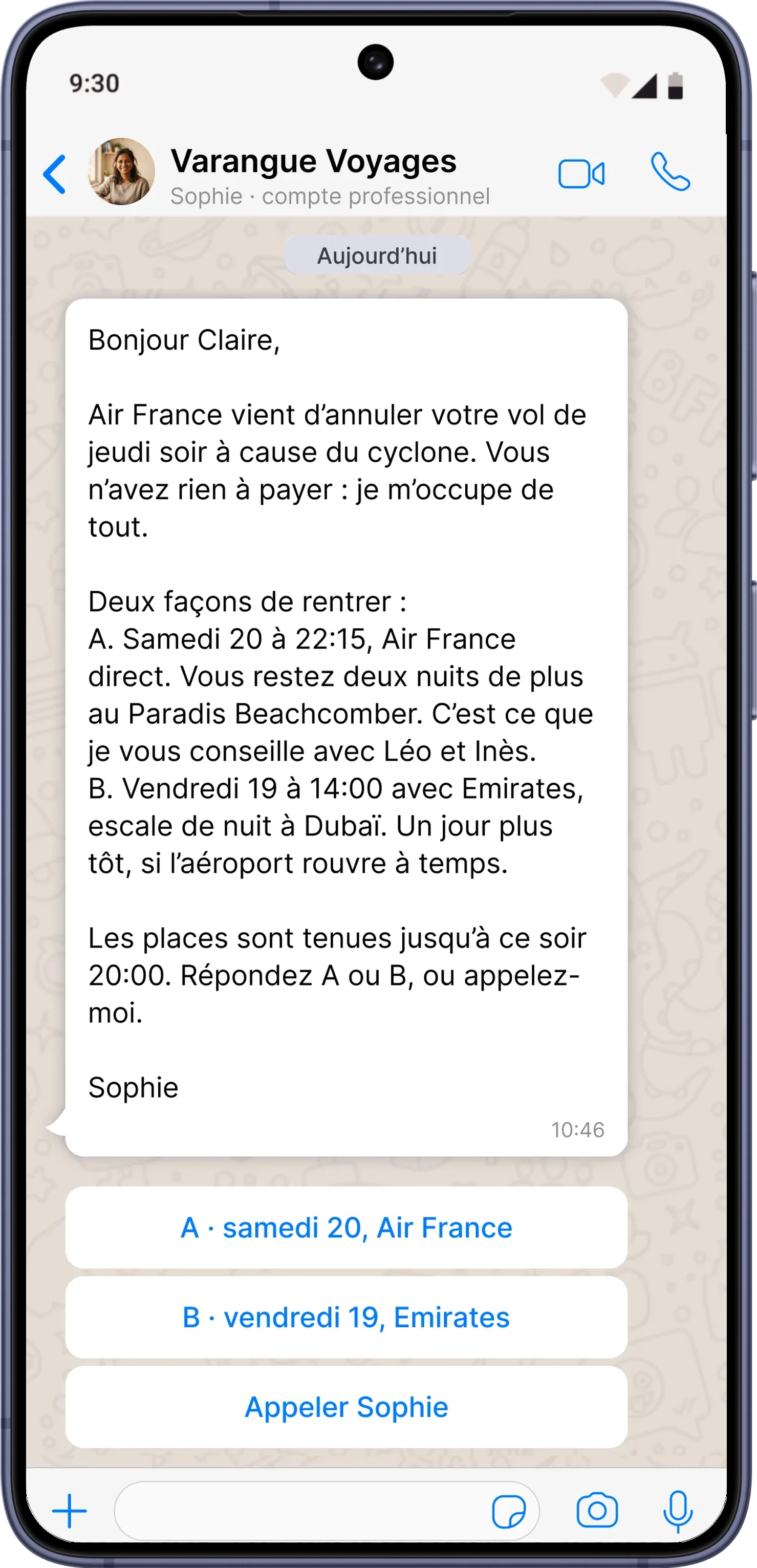
A co-founder of a consultancy for tourism businesses, 28 years in travel, gave it 5 out of 5. Where she expects the AI to slip: “after-sales, like a cancelled flight, because there are a lot of outside parts” (translated from French).
What I can show is the order I work in, and that each screen comes from something I found. The research is why there’s no chat window, and the object model is why the system prepares and a person signs on every screen.
Researched
Six studies and almost 1,000 sources, every claim cited.
Designed
The expert’s workspace and the proposal the client opens, in three agency themes.
Alizé started as a case study. I now want to build it as a real product, and the next step is a prototype I’ll make with Claude Code. Before that, the brand has to settle, then the design system, then the screens.
Brand
An art director is redoing the colours and keeping the astrolabe. I’m waiting for the guides before building anything on top.
Design system
The variables and components already live in their own file. They take the new colours first, then grow as the screens need them.
Screens
The 52 screens, rebuilt from the kit one flow at a time, with the bad day drawn next to the happy one.
Prototype
A version of Alizé you can click through, built from the same tokens and components as the screens.
One colour, from token to code
royal/action
Its name says what it’s for: anything you can act on. It points to blue 600.

Bouton/Primaire
It uses the variable, never the hex code.
Button, variant primary
Same name in code, generated from the same token file.
Bouton / Primaire
Where a developer and I will check the two still match.
When the art director’s colours arrive, only the token should change.
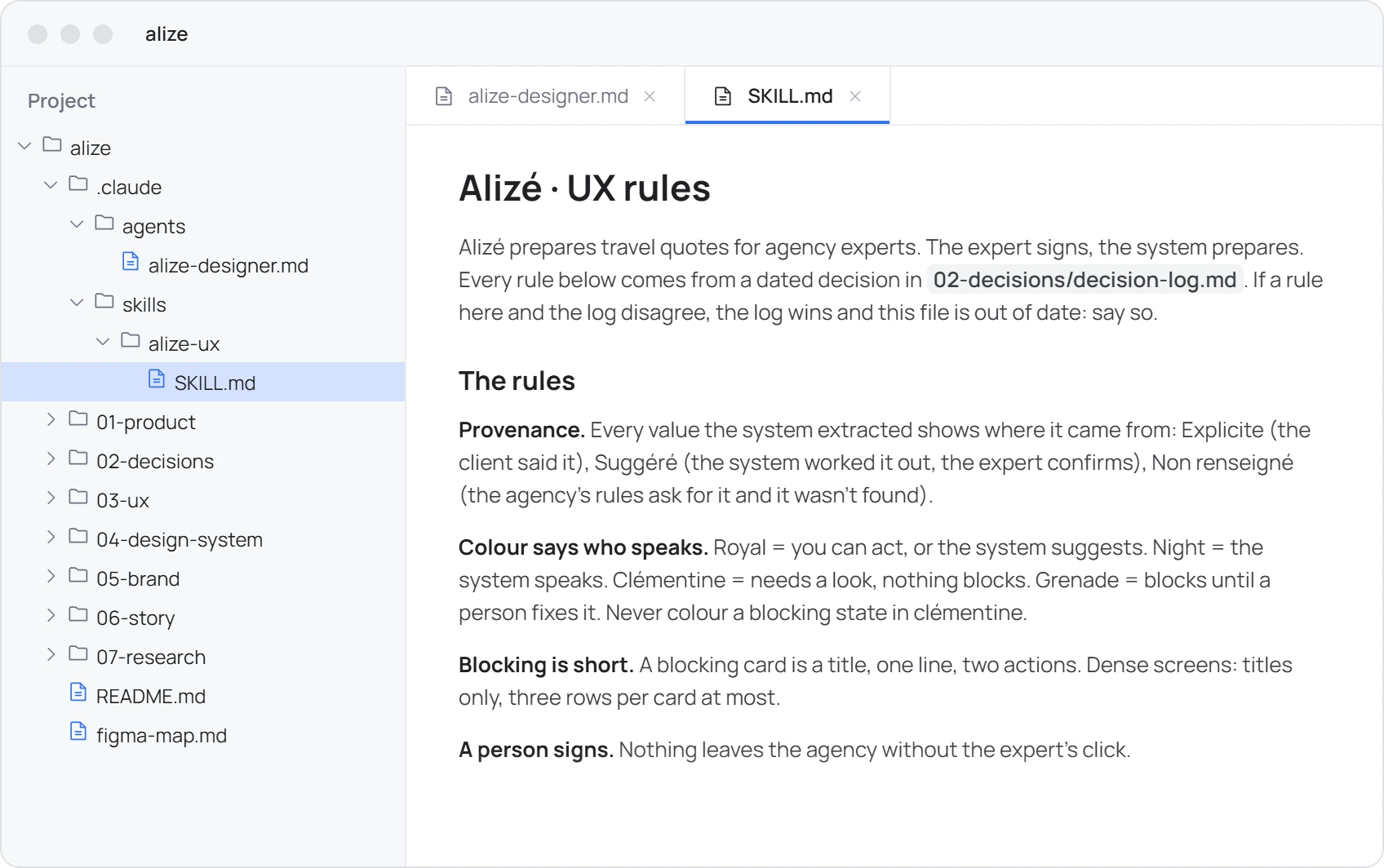
A designer agent that knows the rules
This is the agent that will do most of the building. It reads the decision log before it starts, builds only from the kit, and tells me when it isn’t sure. The decisions stay mine.